Trade show booth return on investment is measured by comparing the revenue a show generates to the total cost of participating. The basic formula: (attributed revenue − costs) divided by costs, then multiplied by 100. Rigorous tracking of leads, sales, and expenses makes this calculation reliable.
Every year, Quebec companies invest thousands of dollars in a trade show, take down their booth, then pack everything away without ever knowing whether the operation was profitable. Yet “it went well” doesn’t justify any budget. This guide offers a concrete framework, built for marketing decision-makers, to turn that impression into solid figures that hold up in front of leadership.
How to calculate trade show booth return on investment
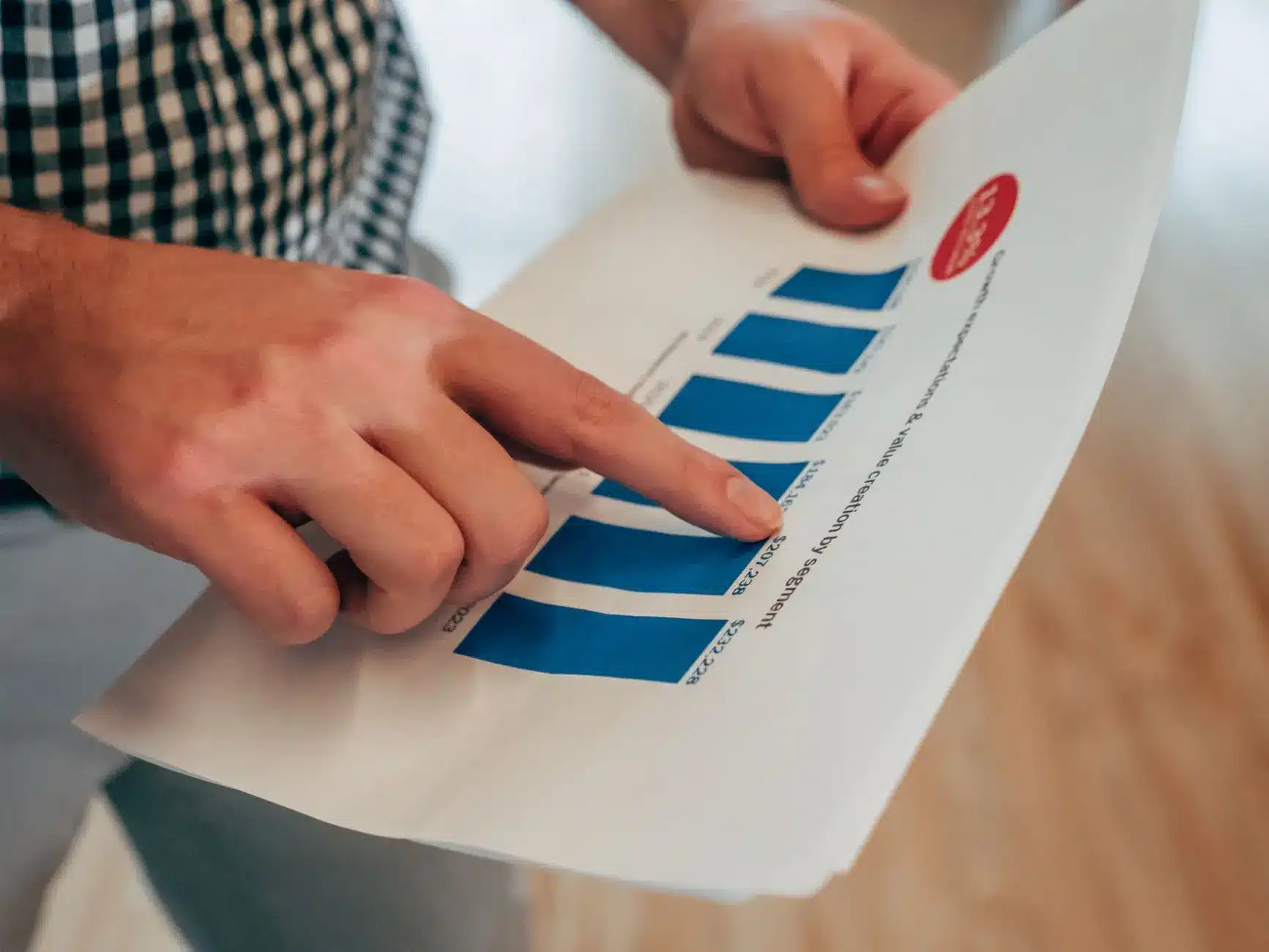
The principle is simple: you compare what a show brings in to what it costs. The reference formula reads as follows: ROI (%) = (revenue attributed to the show − total cost of participation) ÷ total cost of participation × 100.
Attributed revenue includes sales directly tied to contacts met on site, as well as contracts signed later thanks to follow-up. A result of 0% means you broke even; beyond that, the event becomes genuinely profitable.
This channel also keeps a rare advantage: roughly 81% of trade show visitors have purchasing power, according to data from the Center for Exhibition Industry Research. So you’re talking to people who make decisions, not just to curious passersby.
Add up all the costs before talking about profitability
An honest profitability calculation starts with a complete total cost. Most companies underestimate the bill because they forget indirect expenses.
Here are the items to add up:
- Design, fabrication, or rental of the booth and its accessories
- Floor space and registration fees charged by the organizer
- Transport, handling, storage, and insurance
- Electricity, internet, furniture, and services ordered on site
- Team travel, lodging, and meals
- Promotion before, during, and after the event
- Salaries and work hours of the people involved
If you’re torn between buying and renting, comparing budget scenarios for renting a booth helps spread the cost across several shows rather than a single one.
The KPIs that really measure your booth’s performance
Final ROI can only be read after the fact. During and after the show, intermediate indicators reveal what’s working. Pick a few and set a target for each.
| Indicator | What It Measures | How to Calculate It |
| Number of leads | Volume of actionable contacts | Total qualified contact records collected |
| Cost per lead | Spending efficiency | Total cost ÷ number of leads |
| Conversion rate | Quality of follow-up | Closed sales ÷ leads × 100 |
| Pipeline value | Revenue potential | Sum of open opportunities |
| ROI | Overall profitability | (Revenue − costs) ÷ costs × 100 |
| Cost per engaged visitor | Booth’s appeal | Total cost ÷ qualified visitors met |
These performance indicators to track at a show form a logical chain: attract, capture, qualify, convert. A weak link breaks the whole measurement. A booth that draws a lot of people but converts few often points to a qualification or follow-up problem, rarely to the traffic itself.
A five-step framework for tracking your results
A repeatable method saves you from starting over from scratch at every edition. These five steps structure your measurement from start to finish.
- Set numeric targets before the show: target number of leads, target pipeline value, acceptable cost per lead.
- Add up the real total cost, without forgetting the team’s time.
- Capture and qualify every contact right at the booth, with a clear maturity level.
- Track conversions over a period of three to twelve months, since most B2B sales close after the event.
- Calculate the ROI, document the lessons learned, and adjust your next participation.
The first step is decisive: without targets, no number means anything. Framing your targets as early as the preparation stage for your show participation gives you a reliable point of comparison. The third step depends heavily on your ability to attract the right visitors rather than a crowd of distracted passersby.
Planning your next show? Take the time to define your goals and budget them out before booking a space: it’s the only way to know afterward whether it was worth the effort.
Common mistakes that skew the profitability calculation
Even with good tools, certain mistakes give a misleading picture of profitability.
- Counting only same-day sales and ignoring the deferred pipeline
- Neglecting the cost of people’s time, often the heaviest line item
- Failing to attribute sales to the right show for lack of a tracking identifier
- Comparing a niche show and a general show using the same targets
- Abandoning leads without follow-up, which destroys returns
The choice of event weighs just as heavily as the booth’s design. Carefully choosing your shows in Quebec based on the actual visitor profile keeps you from diluting your budget. In short, strong trade show booth return on investment depends as much on rigorous tracking as on the quality of the booth.
Conclusion
Measuring trade show booth return on investment isn’t mysterious: add up all the costs, track clear KPIs, attribute sales over several months, then apply the formula. This discipline turns a budget seen as an expense into a manageable investment, edition after edition. Before your next participation, set your numeric goals and estimate your budget: it’s the best way to defend your results and improve the profitability of every show.
FAQ
How do you calculate the return on investment of a trade show booth?
Trade show booth return on investment is calculated by subtracting the total cost of participation from the revenue attributed to the show, then dividing by that cost and multiplying by one hundred. First add up all the real expenses, from transport to salaries. Then track sales stemming from leads over several months. A positive result confirms profitability, while a low ratio signals adjustments to plan for quickly.
Which KPIs should you track to measure a booth’s performance?
Focus on a few truly useful indicators: the number of qualified leads, the cost per lead, the post-show conversion rate, and the value of the pipeline generated. Add the cost per engaged visitor to assess the booth’s appeal. These show KPIs offer a complete read, from first contact through to the sale. Set a numeric target for each before the event, or your results will remain impossible to interpret properly.
Over what period should you measure a trade show booth’s profitability?
A trade show booth’s profitability isn’t judged on the evening the show closes. In a B2B sales cycle, most contracts are signed in the months that follow, once quotes are validated and budgets are approved. Plan for an observation window of three to twelve months depending on your industry. Attribute every sale to the right show using a campaign identifier in your tracking tool.
Does a high cost per lead mean a bad show?
Not necessarily. A high cost per lead at a niche show can still be very profitable if the contacts are highly qualified and lead to significant contracts. Always compare this cost to the average value of a sale and the actual conversion rate. A cheap general show that only produces curious onlookers often ends up costing more in the end. Quality beats volume.