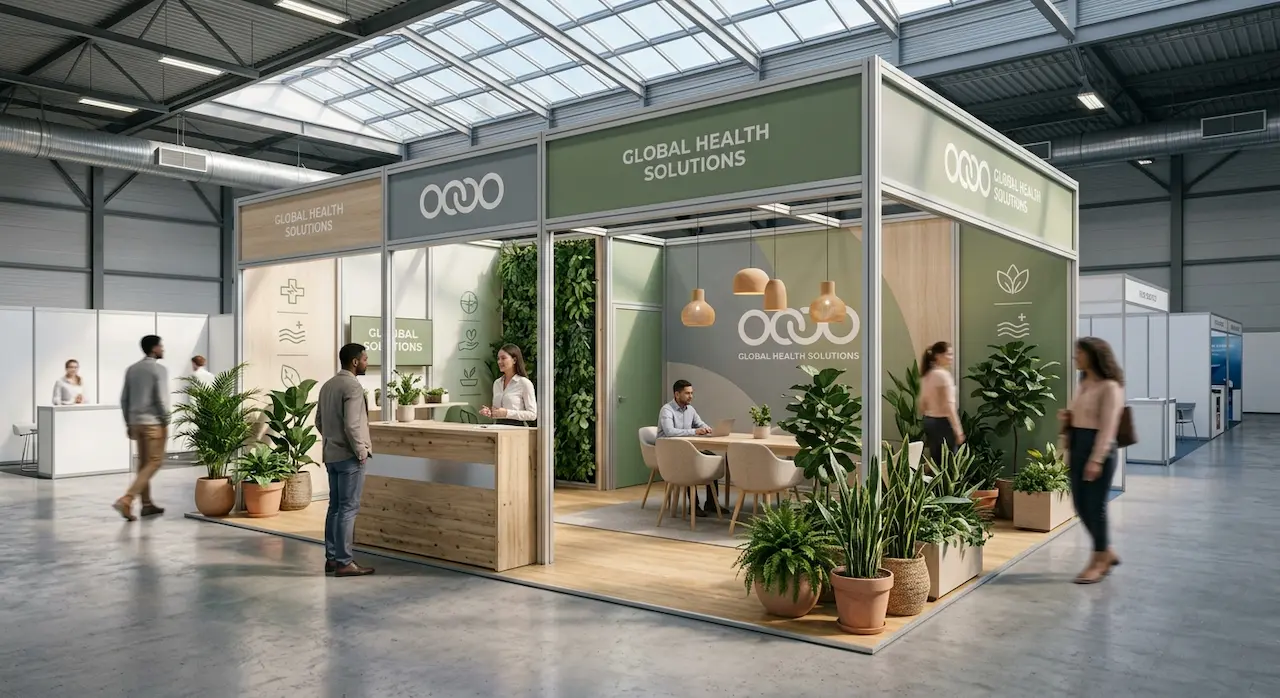
An eco-responsible trade show booth reduces a show’s environmental footprint by relying on reusable structures, recyclable materials such as aluminum, and modular design. This approach cuts down on single-use waste and transport, while keeping the booth attractive and its marketing impact strong with visitors.
Organizing a trade show still too often goes hand in hand with disposable structures, single-use carpeting, and long truck hauls. An eco-responsible trade show booth completely upends that equation. By rethinking materials, reuse, and logistics, a Quebec company can lighten its footprint while still projecting a strong, consistent brand image to its clientele.
The best part is that responsibility and performance aren’t at odds. A well-designed booth catches the eye, tells your story, and gets reused for years. Here’s how to get there, step by step.
Why rethink the footprint of your trade shows
Trade shows, conferences, and expos are powerful business levers, but they generate a significant amount of waste and emissions. Structures assembled then thrown out, single-use carpeting, printing redone for every edition: the environmental toll adds up quickly.
For a Quebec SME, addressing that toll goes beyond a simple image question. Customers, partners, and employees value concrete action. A booth built to last therefore becomes a credibility argument as much as a responsible choice.
The good news is that reducing this footprint doesn’t mean reducing visual impact. It’s often the opposite, as confirmed by the trends shaping 2026.
What is an eco-responsible trade show booth
An eco-responsible trade show booth is a booth designed to minimize its impact across its entire life cycle, from fabrication to disassembly. It’s not just a green coat of paint, but a comprehensive approach that covers materials, structure, transport, and the end-of-life of components.
Three principles set it apart from a traditional build:
- a structure reusable from one event to the next;
- recyclable or renewable materials;
- streamlined logistics that reduce transport and storage.
A booth built to last
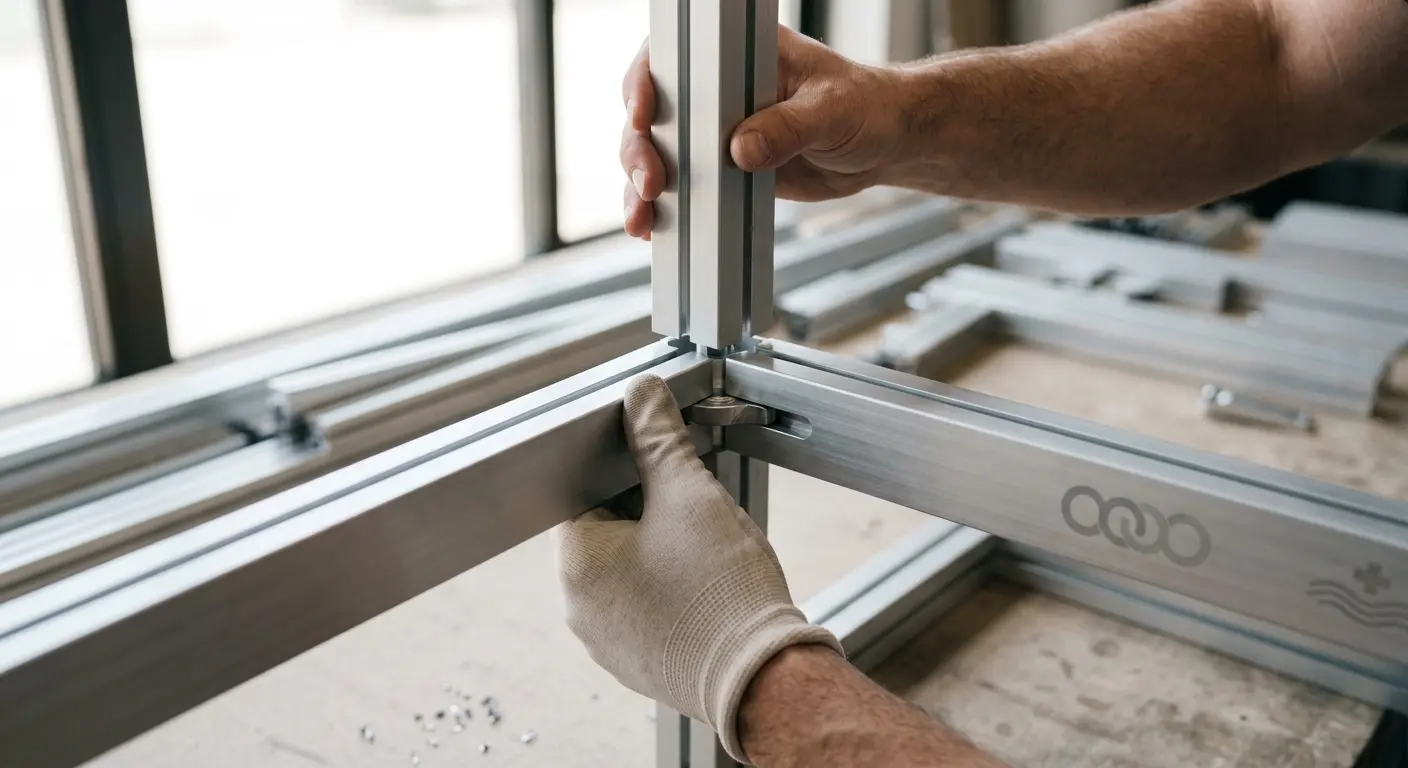
A sustainable booth disassembles without tools, packs down compactly, and goes back up for the next show. Graphics can be swapped as needed, which allows the message to be refreshed without throwing away the entire structure. This longevity is the real heart of the eco-friendly approach.
Reuse and modularity at the heart of a sustainable booth
Reuse is the most powerful lever. A modular trade show booth system relies on aluminum frames and interchangeable panels that can be assembled into multiple configurations.
In practice, the same structure can go from a 10 ft by 10 ft space to a larger island, simply by adding modules. This reusable booth becomes a profitable asset over several years rather than a repeated expense at every show.
A profitable asset, not a disposable expense
An eco-designed booth also relies on standardized elements that are easy to repair. Replacing a damaged panel costs less and avoids scrapping the entire booth. With every show, you get more value out of your initial investment, while reducing the production of new material.
Getting ready for your next trade show? Take the time to discuss your business goals and environmental commitments with a team specialized in designing sustainable booths before finalizing your design.
Sustainable materials to favor for an eco-friendly booth
Material choice makes a measurable difference. Aluminum is especially prized: recycling aluminum uses about 95% less energy than producing new metal, and it retains its properties through repeated reuse cycles.
| Material | Eco Advantage | To Keep in Mind |
| Aluminum | Lightweight, sturdy, recyclable many times over | Higher initial investment |
| Recycled polyester fabric | Reprintable, lightweight, reduces shipping volume | Requires careful upkeep |
| Certified wood | Renewable, warm, repairable | Heavier to transport |
| Honeycomb cardboard | Recyclable, affordable, ideal for short-term use | Less durable over time |
By contrast, PVC and disposable carpeting are among the most problematic materials, difficult to recycle and often thrown out after a single use.
Graphics you replace, not throw away
Choosing visuals stretched over fabric rather than glued onto rigid panels makes it possible to change the message without breaking apart the structure. This simple move extends the booth’s lifespan and cuts down on waste from one edition to the next.
Reducing transport and storage between two shows
Materials aren’t the only factor at play. Transport weighs heavily on a booth’s carbon footprint. A compact, lightweight booth that’s easy to stack reduces the volume to move and the number of trips.
- Favor structures that pack into reusable crates.
- Combine equipment from several events into a single delivery.
- Store the structure between two shows rather than rebuilding it entirely.
For companies that exhibit infrequently, renting your exhibit structure can also reduce the production of new material, since the same equipment serves multiple exhibitors.
Conclusion
Adopting an eco-responsible trade show booth proves that a booth can be both high-performing and responsible. By relying on reuse, sustainable materials, and streamlined logistics, a company reduces its footprint without sacrificing anything in visual impact. To build a consistent, credible presence, surround yourself with a manufacturer established in Quebec and plan every show with a long-term outlook. Make your next event a showcase for your values as much as for your products.
FAQ
What is an eco-responsible trade show booth?
An eco-responsible trade show booth is a booth designed to limit its environmental impact throughout its life cycle. It relies on a reusable structure, recyclable materials such as aluminum, replaceable graphics, and optimized logistics. Rather than being thrown away after an event, it disassembles, packs down compactly, and reconfigures for the next shows, which cuts down on waste and recurring costs.
Does a sustainable booth cost more than a disposable one?
At purchase, a quality modular structure can represent a higher initial investment than a low-end build. Across several events, that math flips quickly. Since the structure gets reused and only the graphics change, the cost per show drops with every participation. Renting is also an affordable option for testing a configuration without tying up a large budget, while cutting down on waste.
Which materials should you favor for an eco-friendly booth?
Aluminum comes out on top, since it’s lightweight, sturdy, and recyclable almost indefinitely without losing its properties. Stretched recycled-polyester fabrics are a great substitute for disposable rigid panels and can be reprinted as needed. Certified wood and honeycomb cardboard offer renewable solutions for counters. On the other hand, it’s best to avoid PVC and single-use carpeting, which are hard to recycle.
Is renting more eco-friendly than buying?
Renting can reduce the footprint when a company takes part in few events per year or wants to avoid storage. The equipment is used by multiple successive exhibitors, which optimizes its life cycle. For an organization present at many shows, having a reusable modular structure is often more advantageous. The right choice depends on how often you exhibit, the storage space available, and your customization needs.